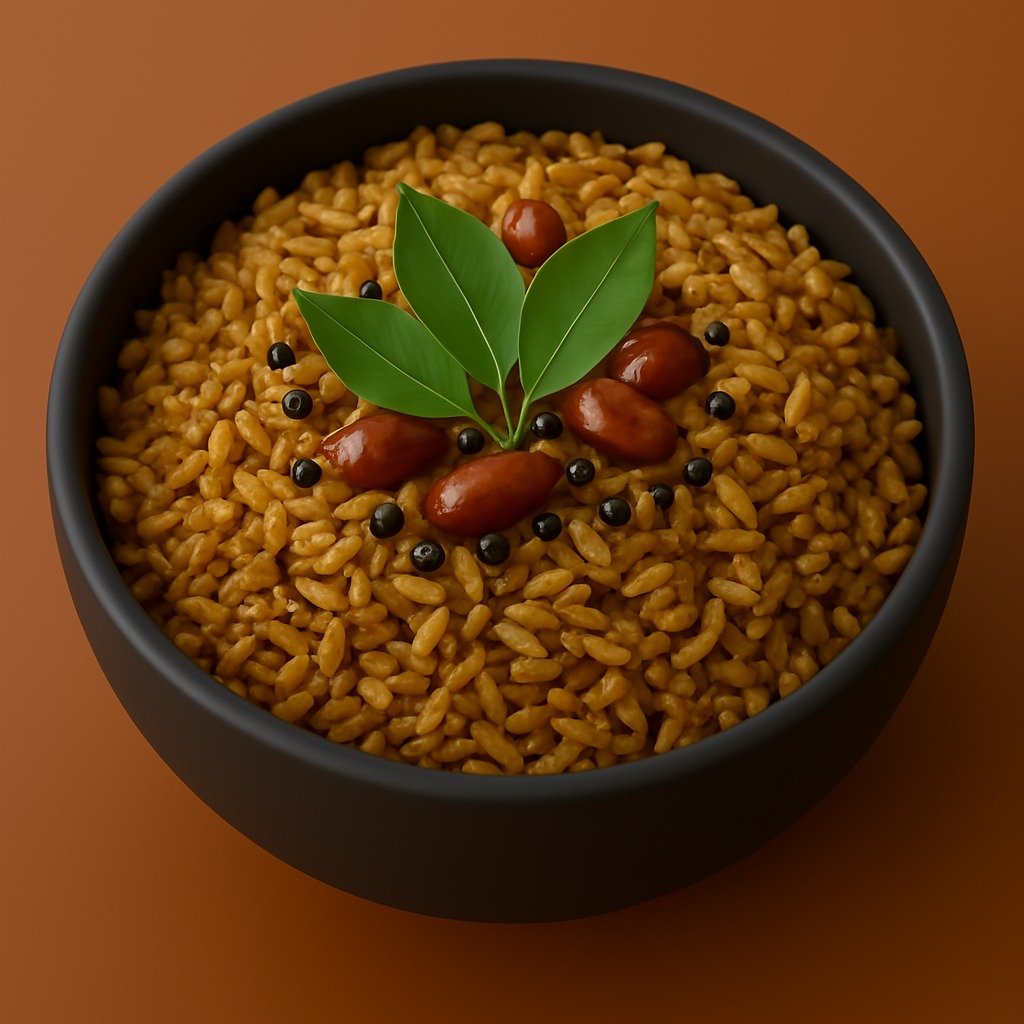
Puliogare isn’t just a dish—it’s an experience. A temple offering, a festival essential, and a travel favourite, this tangy tamarind rice is a South Indian treasure that delights the senses and satisfies the soul. With its signature blend of sour tamarind, spicy roasted spices, and nutty crunch, Puliogare is a bold, grounding dish that holds cultural, culinary, and Ayurvedic significance in equal measure.
What Is Puliogare?
Puliogare (or Puliyodarai / Pulihora) is a tamarind-based rice dish commonly prepared in Karnataka, Tamil Nadu, and Andhra homes. The base is a thick, flavour-packed tamarind paste spiced with roasted ground masalas, tempered with mustard seeds, curry leaves, and peanuts. Mixed into cooked rice, it becomes a long-lasting, travel-ready dish with a rich, tangy, slightly spicy flavour profile.
How to Make Puliogare: The Traditional Way
🛒 Ingredients:
For the Tamarind Paste
- 1 lemon-sized ball of tamarind (soaked in ½ cup warm water)
- 2 tsp sesame oil
- ½ tsp mustard seeds
- 1 sprig curry leaves
- 1 tbsp chana dal
- 1 tbsp urad dal
- 2–3 dry red chilies
- A pinch of hing (asafoetida)
- ¼ tsp turmeric powder
- Salt to taste
For the Spice Powder (Dry Roast and Grind)
- 1 tsp sesame seeds
- 1 tbsp coriander seeds
- 1 tsp fenugreek (methi) seeds
- 4–5 dry red chilies
- 1 tbsp chana dal
- A few curry leaves
To Assemble
- 2 cups cooked rice (preferably sona masoori or any short-grain rice, cooled)
- 1 tbsp sesame oil or ghee
- 2 tbsp peanuts (roasted)
🥣 Method:
- Soak tamarind in warm water and extract thick pulp. Set aside.
- Dry roast all spice powder ingredients, let cool, and grind into a coarse powder.
- In a kadai, heat sesame oil. Add mustard seeds, let them splutter.
- Add chana dal, urad dal, red chilies, hing, turmeric, curry leaves—sauté till golden.
- Add tamarind extract and let it boil until thick and oil separates.
- Add the spice powder and salt. Cook till paste thickens.
- Mix cooked rice with this paste. Add roasted peanuts and a drizzle of sesame oil.
- Let it rest for 30 minutes before serving to allow flavours to soak in.
🌿 Ayurvedic Benefits
- Tamarind helps stimulate appetite and digestion, particularly for Kapha-type sluggishness.
- Sesame oil is warming, grounding, and ideal for Vata balancing.
- Curry leaves, mustard, and hing enhance Agni (digestive fire) and reduce bloating.
- Fenugreek and coriander are cooling and detoxifying, keeping Pitta in check.
- Dry preparation with no dairy makes it ideal during colds or damp weather.
💡Pro Tips from the Indian Kitchen
- Prepare the tamarind paste in advance and store in the fridge—it keeps for weeks.
- Let the rice cool before mixing to avoid sogginess.
- For a temple-style flavour, use only sesame oil and skip onion or garlic.
- Add a tsp of jaggery to balance the sourness for a Karnataka-style Puliogare.
- Don’t skip the resting time—it enhances taste dramatically.
❤️ Why We Love Puliogare
- Boldly tangy, spicy, and utterly addictive
- No onion, no garlic, perfect for sattvic and temple offerings
- Keeps well for hours or days—ideal for travel and lunchboxes
- Great way to use up leftover rice and reduce waste
- One of the few dishes that feels festive and grounding at once
🧘 Ideal For
- Festival prasadam or temple-style meals
- Travel and tiffin boxes—no spoilage even without refrigeration
- When you crave something spicy-sour and energizing
- A Satvik lunch without onion or garlic
- Days when digestion needs a push but you want to keep it simple