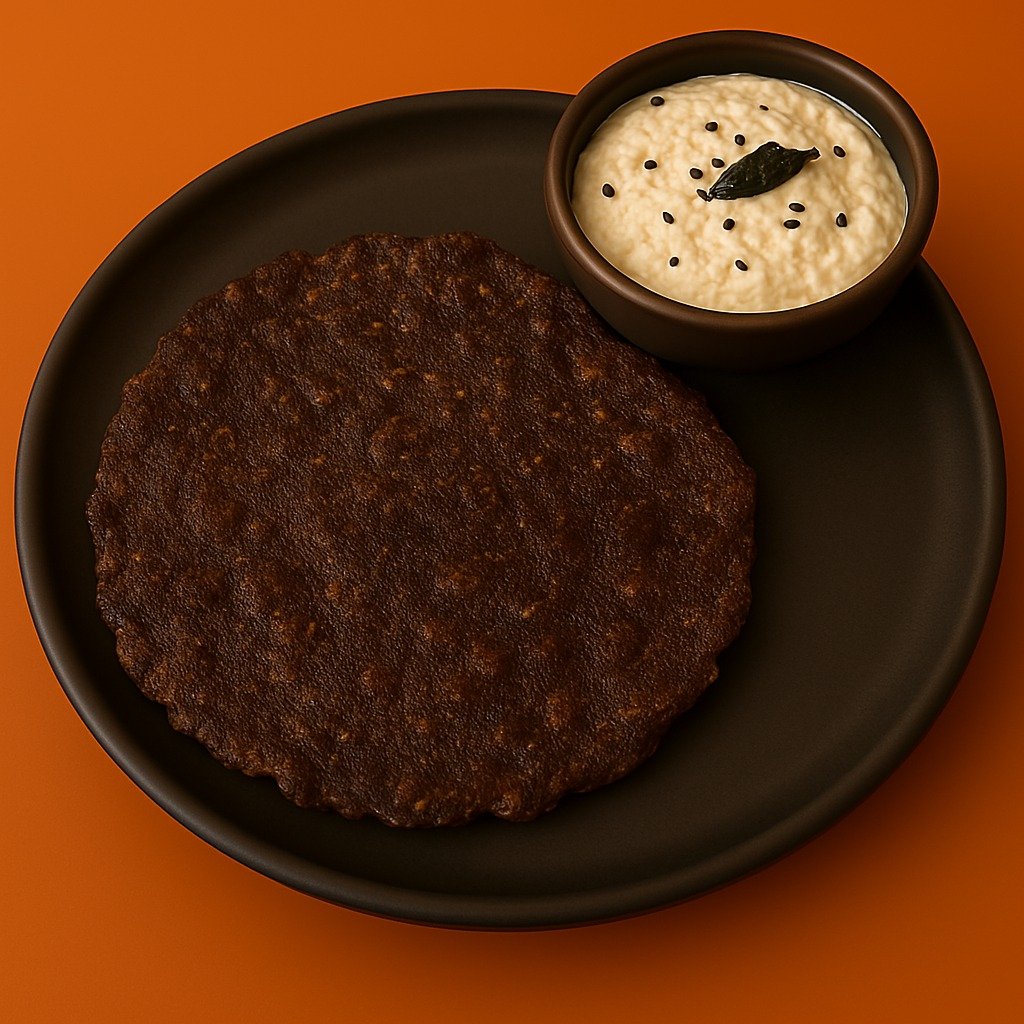
Ragi Rotti is more than just a flatbread — it’s a grounding, soul-warming experience from South Indian kitchens. Crafted with care and shaped by hand, this humble dish turns the ancient millet into a rustic, hearty meal that nourishes deeply. Whether eaten hot with chutney or softened with ghee, every bite is a reminder of how tradition can taste both comforting and wholesome.
What Is ragi RotTi?
Ragi Rotti is a traditional South Indian flatbread made using ragi flour (finger millet). Rich in calcium, iron, and fiber, ragi is a powerhouse grain that has been a part of Indian diets for centuries. The dough is usually mixed with onions, green chilies, coriander, and sometimes grated veggies. It’s then patted flat on a greased surface and cooked on a hot tava. The result? A crisp-edged, earthy-tasting rotti that’s gluten-free and highly nutritious.
How to Make ragi RotTi: The Traditional Way
🛒 Ingredients:
- 1 cup Ragi flour (finger millet)
- ¼ cup finely chopped onion
- 1 tsp jeera (cumin seeds)
- 1 tsp grated ginger
- 1 finely chopped green chili (optional)
- 2 tbsp chopped fresh coriander
- Salt to taste (rock salt preferred)
- Warm water (for kneading)
- Ghee or sesame oil for roasting
🥣 Method:
- Mix Dough:
- Shaping Roti:
- Grease a banana leaf or parchment paper.
- Take a small ball of dough and pat it into a thin roti using your wet fingers. Aim for even thickness.
- You can also roll between two sheets of parchment if more comfortable.
- Cooking:
- Heat a tawa or flat pan. Transfer the roti carefully and cook on medium heat.
- Drizzle ghee or sesame oil and flip once one side is cooked.
- Cook both sides until dark brown spots appear.
- Serving Suggestion:
🌿 Ayurvedic Benefits
- Rich in Calcium & Iron (Balya & Rasayana)
Strengthens bones, teeth, and hair. Supports tissue regeneration and is ideal during pregnancy, recovery, or growth phases. - Pitta & Kapha Balancing
Ragi is cooling (sheeta virya) and dry/light (ruksha/laghu) in nature, making it helpful for calming Pitta and Kapha doshas. - Supports Weight Loss & Metabolism
High in fiber and slow-digesting, it curbs cravings and supports meda dhatu (fat metabolism). - Diabetes-Friendly
- Ragi has a low glycemic index, making it ideal for maintaining healthy blood sugar levels.
💡Pro Tips from the Indian Kitchen
- Use Warm Water for Mixing:
Warm water helps bind the dough better and makes it easier to spread. - Work Quickly with Fresh Dough:
Ragi dough tends to dry out, so make it in small batches and cook immediately. - Grease Surface & Hands:
Use a banana leaf, greased plate, or parchment paper to pat the dough. Wet or oil your fingers to prevent sticking. - Thin and Even is Key:
Flatten the dough evenly for a crispy texture and uniform cooking. - Don’t Overcook:
Cook on medium heat and avoid over-flipping. Ragi can dry out quickly if left too long on heat. - Flavor Up the Dough:
- Add chopped onions, curry leaves, coriander, cumin, and grated carrot or coconut to enhance flavor and texture.
❤️ Why We Love ragi RotTi
We love Ragi Rotti because it’s the perfect marriage of tradition and wellness. It’s naturally gluten-free, loaded with nutrients, and keeps you full without weighing you down. Its slightly nutty, earthy taste feels authentic and grounding, making it more than just a meal — it’s nourishment for both body and soul. Whether eaten for breakfast or dinner, it reconnects us with age-old food wisdom in every delicious bite.
🧘 Ideal For
- Gluten-free and diabetic-friendly diets
- Bone health (rich in calcium)
- Iron-rich meals for women & children
- Hearty breakfasts or light dinners
- Weight management and satiety
- Traditional, seasonal, or sattvic eating plans