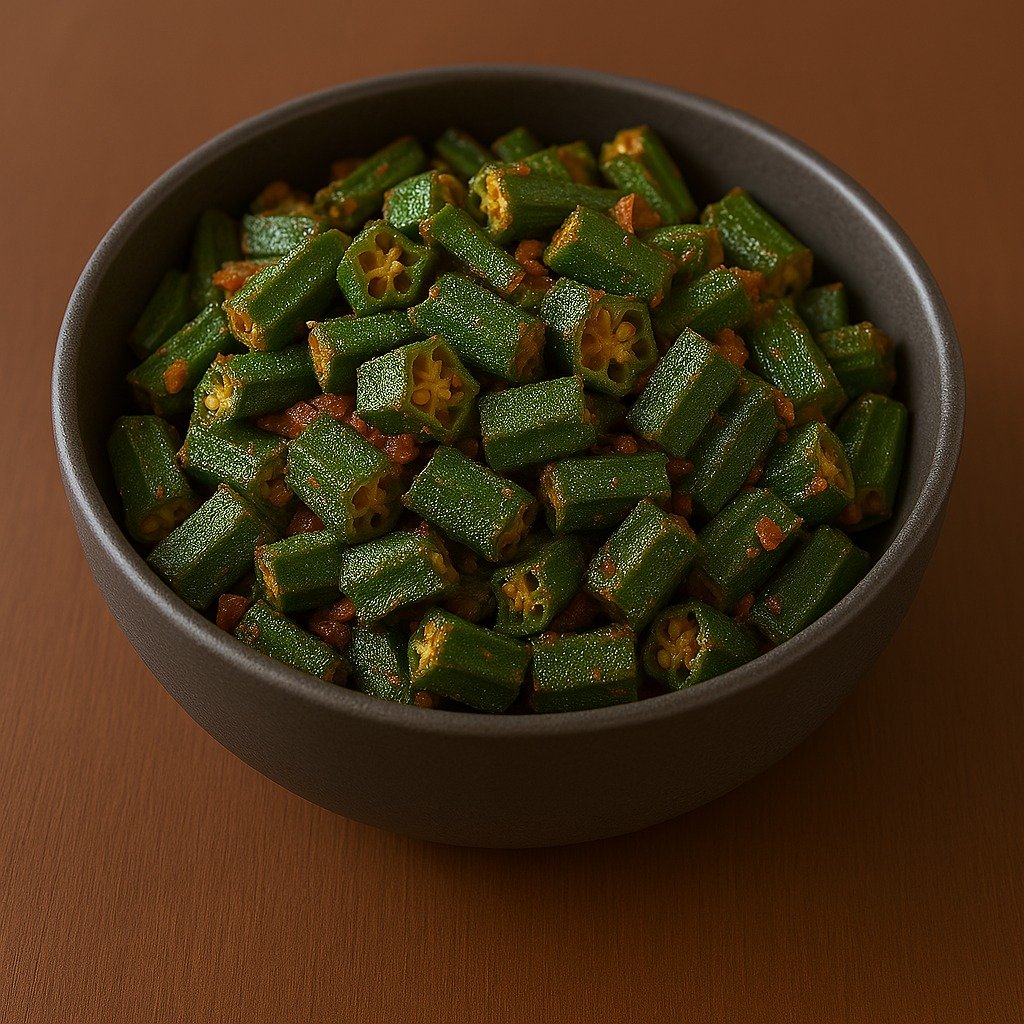
Bhindi (okra) is a sattvic vegetable that supports clarity and calmness. This low-spice masala sabzi lets the natural sweetness and texture of bhindi shine, supported by just a handful of grounding, digestive spices.
What Is Bhindi Masala Sabzi?
A semi-dry sautéed okra dish made with minimal yet impactful spices; no garlic or onion overload. It’s a sattvic, pairs well with soft phulkas or simple dal-chawal.
How to Make Bhindi Masala Sabzi : The Traditional Way
🛒 Ingredients:
- 250g fresh bhindi (okra), washed, dried, and cut into 1-inch pieces
- 1 tbsp cold-pressed oil or ghee
- ½ tsp jeera (cumin) powder
- ½ tsp coriander powder
- ¼ tsp turmeric powder
- A pinch of red chilli powder (optional – check your vegetable list)
- A small pinch of black pepper powder
- Salt to taste
- Few drops of lemon juice (optional, for tang)
- Finely chopped coriander leaves for garnish (optional)
🥣 Method:
- Prep the bhindi: Ensure bhindi is fully dry before cutting to prevent sliminess.
- Heat oil/ghee in a thick-bottomed pan.
- Add the bhindi and sauté on medium heat for 6–8 minutes till lightly crisp and tender. Stir occasionally.
- Add turmeric, coriander powder, jeera powder, black pepper, and a tiny pinch of red chilli powder. Mix gently.
- Cover and cook for 2–3 more minutes on low flame. Do not over-stir.
- Add salt towards the end to prevent stickiness.
- Finish with lemon juice or curd (if using) and garnish with coriander leaves.
🌿 Ayurvedic Benefits
- Bhindi is cooling, grounding, and mildly sweet, great for pacifying pitta and vata.
- The mucilage is soothing for the gut and can help in constipation.
- Mild spices improve agni (digestive fire) without creating heat.
💡Pro Tips from the Indian Kitchen
- Always dry bhindi thoroughly before cutting.
- Use a wide pan so the bhindi doesn’t steam and turn sticky.
- Avoid adding salt in the beginning; it draws out moisture.
- Adding lemon or curd enhances the taste and reduces residual stickiness.
❤️ Why We Love Bhindi Masala Sabzi
- Calming, sattvic and flavourful
- Low-oil, light on the tummy
- Pairs well with most grains and dals
- Keeps bhindi’s true texture and taste intact
🧘 Ideal For
- Sattvic or low-spice diets
- Children, elderly, or those recovering from illness
- Lunch or light dinners with jeera rice or phulkas
- Gut-friendly meal combinations