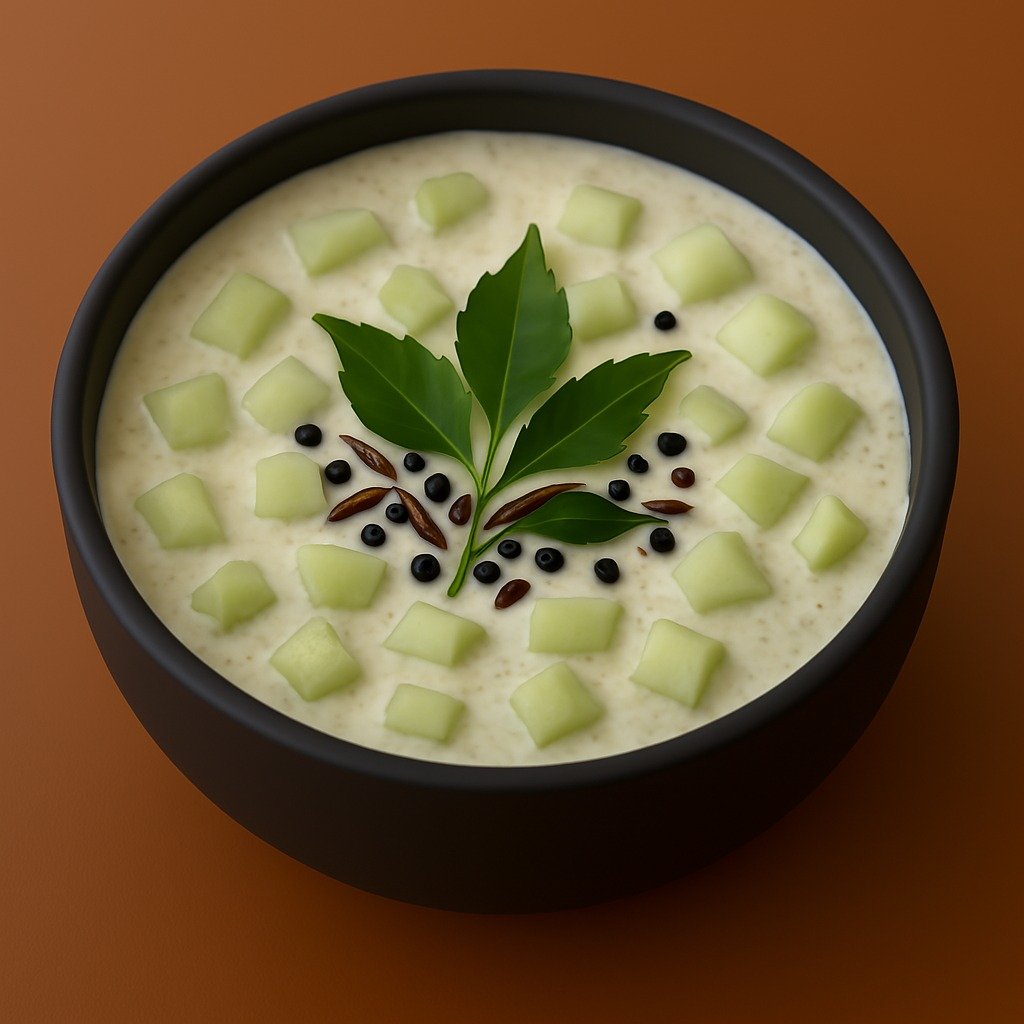
When the body craves calm and the stomach seeks softness, Thambuli delivers. This lesser-known gem of Karnataka cuisine is a gentle, cooling yogurt-based dish infused with raw herbs and spices. Unlike most Indian dishes that involve heat, Thambuli celebrates raw ingredients and mindful eating. It’s medicinal, minimalist, and deeply refreshing—a bowlful of chill, in every sense.
What Is Thambuli?
Thambuli (from the Kannada word thampu meaning cool) is a raw, spiced yogurt preparation traditionally made using fresh herbs like doddapatre (ajwain leaves), Brahmi, spinach, or coriander. Ground with coconut, cumin, and green chili, and then mixed into fresh curd, Thambuli is never cooked, preserving its full pranic energy. It’s typically served with hot rice and ghee, creating a soothing balance of warm and cool.
How to Make Thambuli: The Traditional Way
🛒 Ingredients:
Basic Thambuli (with doddapatre / coriander / Brahmi)
- ½ cup fresh herb leaves (e.g., coriander, doddapatre, Brahmi, or curry leaves)
- ½ cup grated coconut
- ½ tsp cumin seeds
- 1 small green chili (mild)
- 1 cup fresh curd (not too sour)
- Salt to taste
Optional Tempering
- 1 tsp ghee or coconut oil
- ½ tsp mustard seeds
- 1 pinch hing (asafoetida)
- Few curry leaves
🥣 Method:
- Wash and roughly chop the chosen herb leaves. If using stronger leaves like doddapatre, lightly roast them for 30 seconds to reduce pungency.
- Grind the leaves with coconut, cumin, green chili, and a little water into a smooth paste.
- In a bowl, whisk the curd until smooth. Mix in the ground paste and add salt.
- Optionally, prepare a tempering of ghee, mustard seeds, hing, and curry leaves. Add it to the Thambuli.
- Serve immediately with hot rice and a touch of ghee.
🌿 Ayurvedic Benefits
- Made from raw herbs, Thambuli retains its pranic (life) energy.
- Curd offers probiotics and coolant properties, especially when fresh and unsour.
- Herbs like Brahmi support mental clarity, doddapatre relieves cough and acidity, coriander calms Pitta, and curry leaves aid digestion.
- Coconut is nourishing yet cooling, balancing for Vata and Pitta.
- The dish is tridoshic when prepared mindfully—especially beneficial for Pitta-prone days.
💡Pro Tips from the Indian Kitchen
- Use mild herbs like coriander or Brahmi for beginners.
- If the curd is too sour, dilute with a little water to mellow it out.
- For children or sensitive digestion, skip the green chili or use black pepper instead.
- Don’t skip ghee—it acts as an anupanam (carrier) for herbal nutrients.
- Use a stone grinder or sil batta for the most traditional taste and texture.
❤️ Why We Love Thambuli
- It’s a 5-minute no-cook recipe with therapeutic value.
- Pairs effortlessly with rice for a complete meal.
- Zero oil needed, unless you add the tadka.
- Feels like food, works like medicine.
- A grandmother-approved dish that doubles as a cooling remedy.
🧘 Ideal For