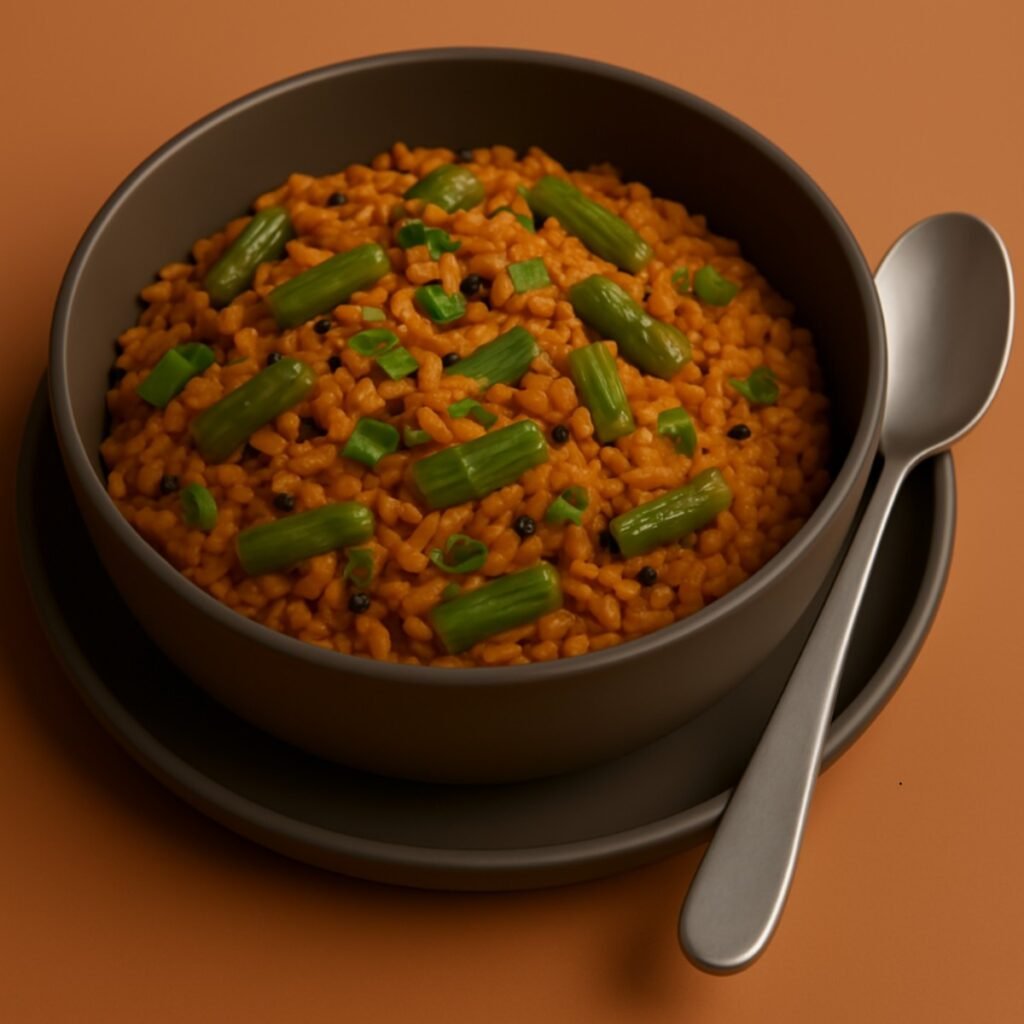
Vangi Bath is a much-loved South Indian spiced rice dish traditionally made with brinjal (eggplant). But guess what? You don’t need brinjal to enjoy the bold, smoky magic of this dish. This brinjal-free version of Vangi Bath still carries the signature masala aroma, robust flavour, and soulful warmth of the original—minus the veggie some folks love to skip.
What Is Vangi Bath Rice?
Vangi Bath typically means “brinjal rice,” but here, we creatively substitute brinjal with other sattvic or neutral vegetables (like capsicum, ash gourd, or even grated carrots) or skip veggies entirely to let the masala take the spotlight. The dish centres around Vangi Bath powder—a fragrant blend of roasted spices—mixed with cooked rice and tempered with curry leaves, mustard seeds, and nuts.
How to Make Vangi Bath Rice: The Traditional Way
🛒 Ingredients:
For the Masala Base
- 1 tbsp Vangi Bath powder (store-bought or homemade*)
- 1 tsp tamarind paste (diluted in 2 tbsp water)
- Salt to taste
For Tempering
- 1 tbsp sesame oil or ghee
- ½ tsp mustard seeds
- 1 tsp urad dal (optional, skip for sattvic version)
- 1 sprig curry leaves
- 1–2 dried red chilies
- A pinch of hing
- 1 tbsp roasted peanuts or cashews
To Assemble
- 2 cups cooked short-grain rice (like sona masoori), cooled
- Chopped coriander leaves for garnish
Vegetable Options (Choose One)
- ½ cup chopped capsicum
- OR ½ cup Cluster Beans
- OR skip entirely for a plain masala rice
🥣 Method:
- Heat oil or ghee in a wide pan. Add mustard seeds and let them splutter.
- Add urad dal (if using), red chilies, curry leaves, and hing. Sauté for a few seconds.
- Add your choice of vegetable and cook until just tender.
- Stir in diluted tamarind paste and let it simmer for 2–3 minutes.
- Add the Vangi Bath powder and mix until aromatic.
- Add the cooked rice and gently mix until well coated with the masala.
- Garnish with roasted nuts and chopped coriander.
🌿 Ayurvedic Benefits
- Tamarind helps digest ama (toxins) and stimulates Agni.
- Sesame oil is grounding and excellent for Vata balancing.
- Hing and mustard aid in relieving gas and bloating.
- Brinjal is avoided by many during specific rituals or sensitivities—this version remains tridosha-friendly depending on the veggie used.
- Great for lunches that energize without heaviness.
💡Pro Tips from the Indian Kitchen
- If you don’t have Vangi Bath powder, you can dry roast coriander seeds, red chilies, cinnamon, and chana dal and grind it fresh.
- Let the rice cool fully before mixing to avoid breakage.
- Capsicum adds crunch and mild bitterness that mimics brinjal’s texture beautifully.
- For extra flavour, sprinkle some fresh grated coconut before serving.
- Squeeze a bit of lemon juice just before serving to brighten the taste.
❤️ Why We Love Vangi Bath Rice
- All the complex flavours of traditional Vangi Bath, none of the brinjal fuss.
- Customisable—fits both sattvic meals and indulgent spreads.
- Makes boring rice exciting with just a spoonful of masala.
- Excellent for travel, potlucks, or lunch boxes.
- A dish that carries nostalgia and novelty in one bite.
🧘 Ideal For