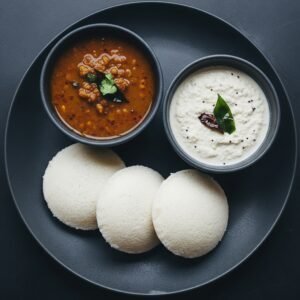
If there’s one dish that unites South Indian breakfast tables and has quietly found a home in kitchens across the country (and even abroad), it’s the humble Idli. Steamed, soft, and served with a side of piping hot sambar or coconut chutney — Idli isn’t just food, it’s comfort on a plate.
Whether you’ve had it on a banana leaf in Tamil Nadu, with peanut chutney in Andhra, or even as idli fry in Mumbai’s streets — this dish proves how simplicity can often be the most satisfying.
What Is Idli?
Idli is a traditional South Indian breakfast item made by steaming a fermented batter of rice and urad dal (split black gram). It’s light, fluffy, and almost sponge-like in texture — mild in taste, but the perfect canvas for flavourful accompaniments like sambar, coconut chutney, and molaga podi (spiced chutney powder).
Traditionally eaten in the morning, idli has become a 24/7 food — suitable for babies, elders, health-conscious folks, and foodies alike.
How to Make Idli: The Traditional Way
🛒 Ingredients:
- 2 cups idli rice (or parboiled rice)
- 1 cup urad dal (split black gram, preferably whole)
- 1 tsp fenugreek seeds (methi dana)
- Salt to taste
- Water as needed
🥣 Method:
Soak the rice and dal separately. Add fenugreek seeds to the dal. Let them soak for at least 6 hours or overnight.
Grind the urad dal into a smooth, fluffy batter, adding water gradually. Then grind the rice to a slightly coarse batter.
Mix both batters together, add salt, and beat lightly with your hand to aid fermentation.
Let the batter ferment overnight or for 8–12 hours in a warm place. It should rise and look bubbly.
Grease the idli plates, pour the batter into each mold, and steam for about 10–12 minutes.
Insert a toothpick or knife — if it comes out clean, your idlis are done!
Serve hot with sambar, coconut chutney, or chutney powder with ghee.
🌿 Ayurvedic Benefits of Idli
- Easy to Digest (Laghu):
- Idlis are steamed and soft, making them easy on the stomach and suitable even for those with weak digestion.
- Supports Balanced Agni (Digestive Fire):
- Fermentation enhances the bioavailability of nutrients and supports Agni, aiding smooth digestion and metabolism.
- Tridosha-Friendly (with moderation):
- Sattvic in Nature:
- Idli is simple, clean, and nourishing — making it a perfect sattvic food that supports clarity, calmness, and balance.
- Fermented & Gut-Friendly:
- The fermentation process introduces natural probiotics, which support gut health and improve digestion and absorption.
- Ideal for Breakfast (Aligned with Dinacharya):
- Ayurveda recommends light yet nourishing meals in the morning, and idli fits this perfectly — warm, soft, and filling.
- Non-Greasy & Nourishing:
- Unlike fried foods, steamed idlis retain prana (life force) and are not heavy on the liver or digestive system.
💡 Pro Tips from the Indian Kitchen
Use cold water to grind dal — this helps it fluff up better.
In cooler climates, ferment the batter inside the oven with the light on or keep it wrapped in a warm towel.
Don’t overfill idli moulds — the batter needs space to rise.
Use wet cloths or muslin on traditional idli plates for a more porous, traditional texture.
❤️ Why We Love Idli
Because it’s soft as a cloud, easy to digest, and completely non-fussy. It’s loved by toddlers and grandparents alike. It travels well, reheats easily, and tastes even better with leftover chutneys.
Also — that unbeatable satisfaction of scooping up sambar with a bite of idli? Pure joy, traditional texture.