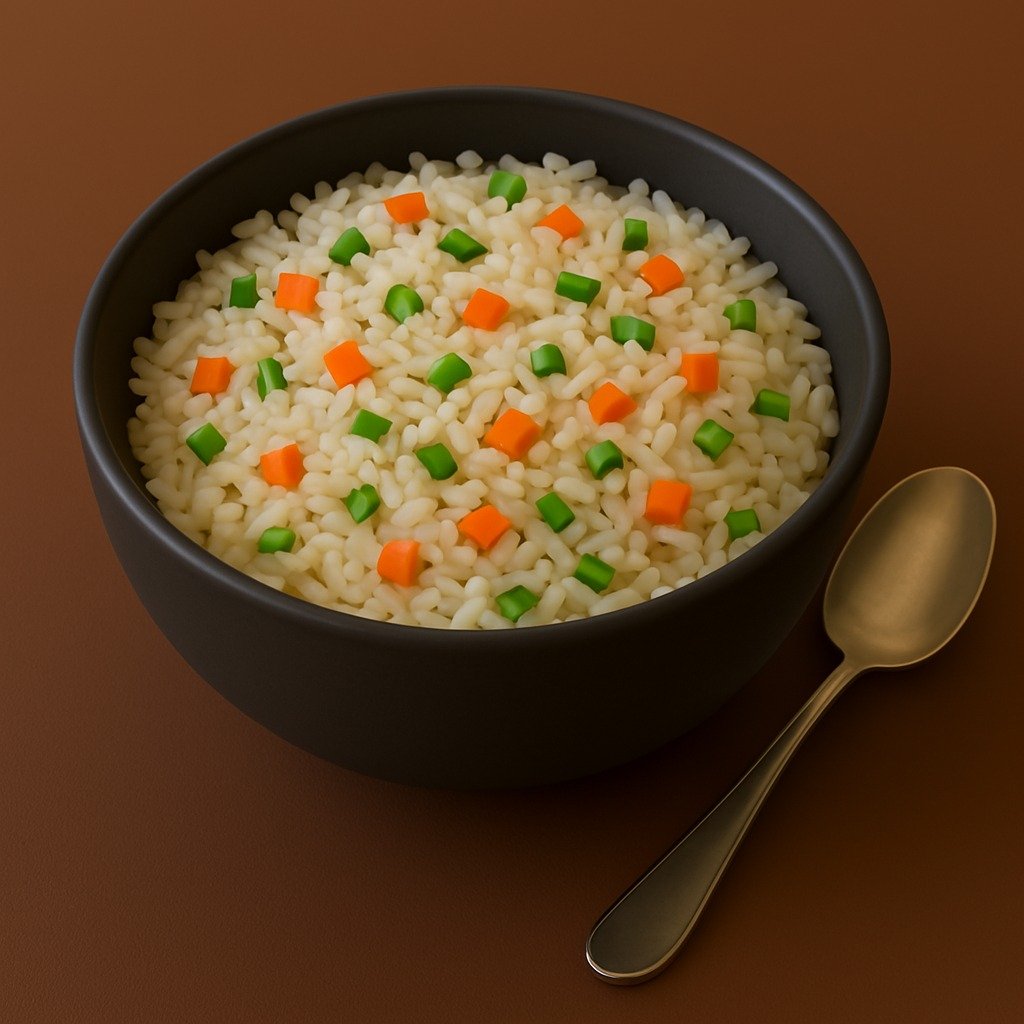
Pulav, the jewel of one-pot rice dishes, is often hijacked by starchy staples like potatoes and peas. But not today. This version is a celebration of vibrant vegetables, balanced spices, and clear digestion, making it perfect for those seeking both lightness and flavour. No peas, no cauliflower, no potato—just clean, sattvic ingredients that sing in unison.
What Is pulav (without peas, cauliflower, potato, turnip)?
Pulav is a mildly spiced rice dish cooked with vegetables and whole spices. Unlike biryani, it’s more subtle and aromatic than spicy. This version deliberately avoids commonly heavy or gas-forming ingredients like peas, cauliflower, potatoes, and turnips—making it easier to digest and more Ayurveda-aligned, without losing out on taste or texture.
How to Make pulav: The Traditional Way
🛒 Ingredients:
main
- 1 cup basmati rice (soaked for 20 minutes)
- 1½ tbsp ghee or cold-pressed sesame oil
- 1 small carrot, finely chopped
- 6–8 beans, chopped
- ½ capsicum, sliced thin
- 5–6 soaked black raisins (optional)
- 10–12 soaked almonds or cashew halves
- Salt to taste
- 2 cups hot water
spices
- 1 bay leaf
- 1 small cinnamon stick
- 2 cloves
- 2 green cardamoms
- ½ tsp cumin seeds
- A pinch of turmeric
- 1 slit green chili (optional)
- Fresh coriander or mint leaves for garnish
🥣 Method:
- Heat ghee in a thick-bottomed pan. Add cumin seeds, bay leaf, cinnamon, cloves, and cardamoms. Sauté until fragrant.
- Add soaked nuts and raisins; sauté until lightly golden.
- Toss in the chopped carrots, beans, and capsicum. Sauté for 3–4 minutes until slightly tender.
- Add turmeric and slit green chili. Mix in the drained rice and gently sauté for 1–2 minutes.
- Pour in hot water and add salt. Bring to a boil, then reduce the flame and cover with a lid.
- Cook on low heat for 12–15 minutes or until rice is cooked and water is absorbed.
- Turn off heat. Let it sit covered for 5 minutes. Fluff gently with a fork. Garnish with fresh herbs.
🌿 Ayurvedic Benefits
- This version avoids gas-forming vegetables (peas, cauliflower, turnip), making it ideal for Vata and Kapha types.
- Lightly spiced and cooked in ghee, it supports Agni (digestive fire).
- Basmati rice is considered sattvic, calming, and nourishing.
- Carrots and beans bring fiber and grounding quality without heaviness.
- Nuts and raisins provide ojas-building nourishment and mental clarity.
💡Pro Tips from the Indian Kitchen
- Soaking rice for at least 20 minutes—gives fluffier grains.
- Always use hot water to avoid temperature shock to the rice.
- Add a few mint leaves or curry leaves for enhanced aroma.
- Nuts and raisins balance the spice and add a subtle sweet crunch.
- Use a wide-bottomed pan for even cooking and fewer clumps.
❤️ Why We Love pulav
- Simple, balanced, and not overwhelming on the stomach.
- Ideal for those avoiding heavy or gas-forming ingredients.
- Customizable with sattvic herbs and spices.
- Pairs beautifully with curd, kadhi, or even a drizzle of lemon.
- Perfect as a light yet festive meal on busy or slow days alike.
🧘 Ideal For
- Ayurvedic detox or sattvic meal days
- Light yet complete lunchboxes
- Post-illness recovery or digestive reset
- Pairing with rajma, kadhi, or veg stews
- Those avoiding peas, potatoes, and bloating vegetables
- Navratri, Ekadashi, or prasad offerings (with tweaks as per dietary rules)