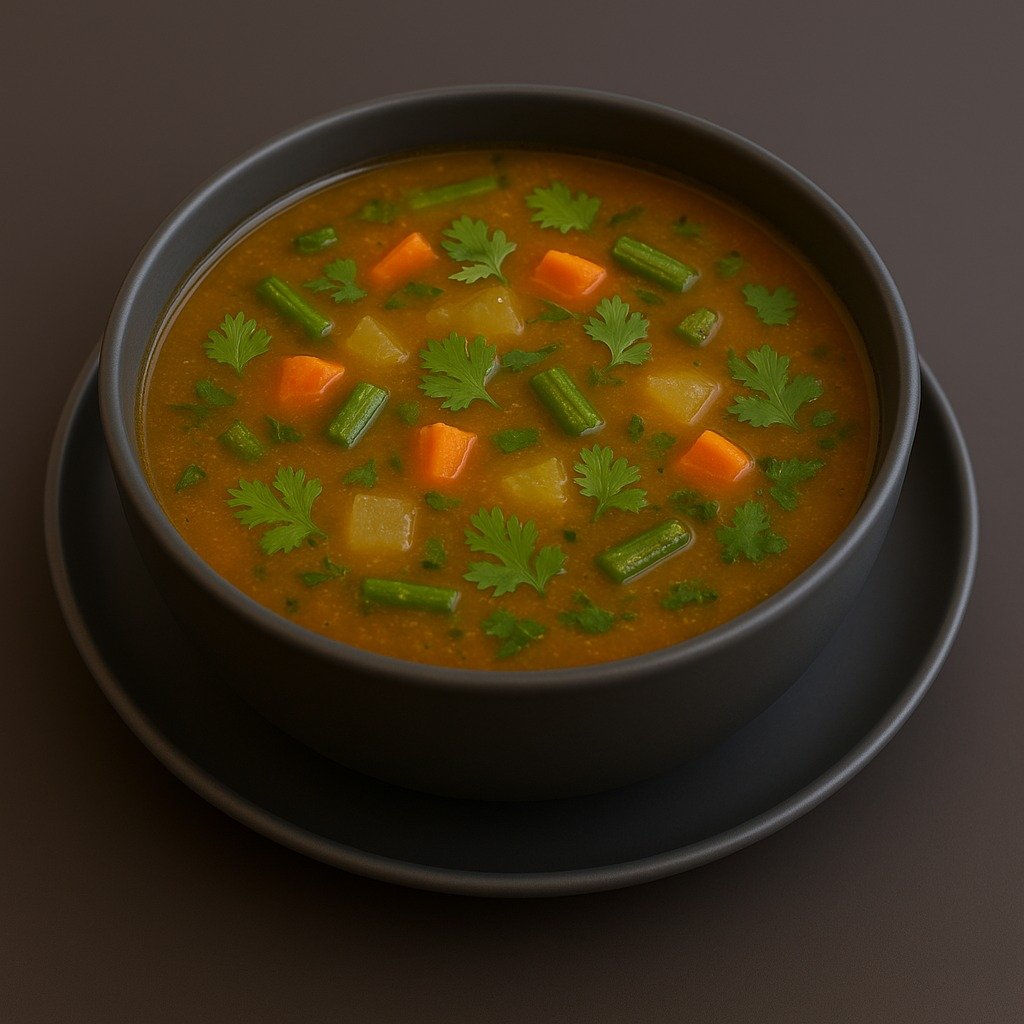
Sambar is often thought of as inseparable from tamarind—but Ayurveda reminds us that when sourness becomes excess, it can inflame the digestive fire and disturb the doshas, especially Pitta. This version of sambar, crafted without tamarind, uses naturally sweet-sour ingredients like tomatoes, amla (optional), or lemon to maintain taste and balance. It’s gentle, grounding, and deeply nourishing.
What Is Sattvic Sambar?
This is a Pitta-friendly variation of classic South Indian sambar, where moong or masoor dal forms the base, blended with seasonal vegetables, mild spices, and sourness adjusted with tomatoes or amla. It’s a sattvic stew, suitable for all doshas when properly balanced.
How to Make Sattvic Sambar: The Traditional Way
🛒 Ingredients:
For the Dal
- ½ cup moong dal or masoor dal
- 2¼ cups water
- ¼ tsp turmeric powder
- A pinch of hing (asafoetida)
Vegetables (choose from)
- 1 carrot (chopped)
- 5–6 beans (cut)
- ½ cup ash gourd or pumpkin
- 1 tomato (finely chopped)
- 1–2 thin slices of fresh amla (optional for tang)
Spice Mix
- 1½ tbsp homemade or mild store-bought sambar powder
- Salt to taste
Optional Sour Adjustments (choose one)
- 2 slices of fresh amla, cooked along with vegetables
- OR extra tomato for subtle acidity
For Tempering (Tadka)
- 1 tsp ghee or cold-pressed sesame oil
- ½ tsp mustard seeds
- 1 dried red chilli
- Few curry leaves
🥣 Method:
- Cook the Dal:
Wash and cook dal with turmeric and hing until soft. Mash and set aside. - Cook the Vegetables:
In a pot, add vegetables (except tomato and lemon) with about 1 cup water. Cover and cook until 80% done. - Add Tomato & Spice:
Add chopped tomatoes and sambar powder. Cook for 5–6 minutes until tomatoes break down. - Add Cooked Dal:
Mix in the mashed dal. Stir well and adjust water for consistency. Simmer for 7–10 minutes until flavors combine. - Prepare the Tadka:
Heat ghee or oil in a pan. Add mustard seeds, red chilli, fenugreek seeds, and curry leaves. Let them crackle. Pour over the sambar. - Final Touch:
- If using lemon juice, add after turning off the flame and resting for 5 minutes.
🌿 Ayurvedic Benefits
- Pitta-friendly: avoids aggravation caused by excessive sourness
- Moong dal is light, sattvic, and balances all doshas
- Vegetables like pumpkin, drumstick, and ash gourd offer grounding, cooling, and nourishing properties
- Curry leaves, hing, and mustard enhance Agni (digestive fire) without overheating
- Promotes satiety without heaviness or acidity
💡Pro Tips from the Indian Kitchen
- Use ripe tomatoes or a slice of amla during cooking for subtle sourness.
- Avoid lemon during cooking—it turns bitter if boiled. Always add after cooking.
- Roasted methi powder (a pinch) enhances earthy depth if tamarind is absent.
- Stir in a few chopped coriander leaves at the end for freshness and prana.
- Let the sambar rest before serving—it deepens the flavor.
❤️ Why We love Vegetable Biryani
- It’s gentle on the gut, especially in summer or for those with acidity
- Maintains authentic flavor without tamarind
- Suitable for sattvic diets and post-detox meals
- Versatile – pair with rice, millet, or sip as soup
- Still gives the full sensory joy of sambar without disturbing dosha balance
🧘 Ideal For
- Pitta season (summer) or during acidity
- Children and elders who need milder food
- Recovery diets
- Sattvic eating days
- Everyday use when you want flavor without overstimulation