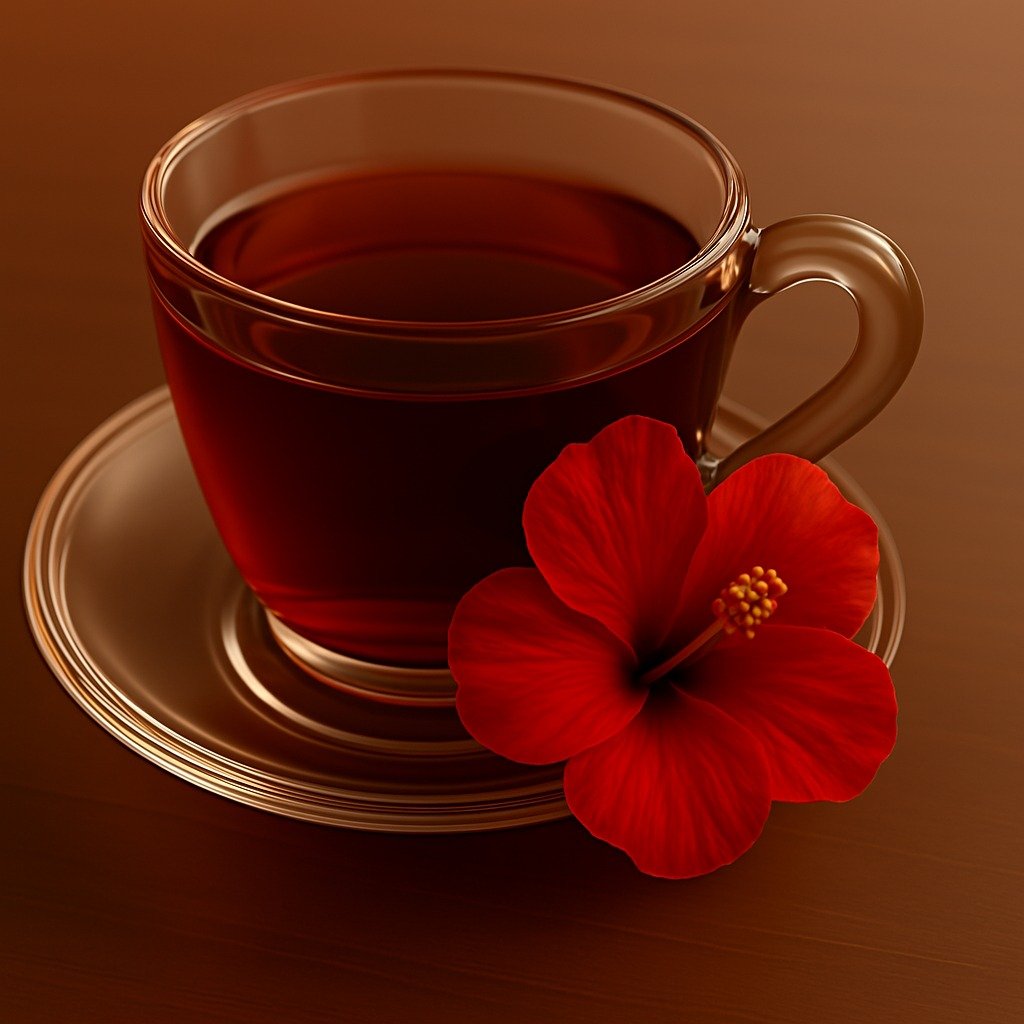
Tart, tangy, and naturally vibrant red, Hibiscus Tea is not just a treat for the senses, it’s cooling, mildly detoxifying, and supports both cardiovascular and reproductive health. Rooted in traditional medicine, this herbal infusion is perfect for sipping hot or chilled, especially during warm or hormonally sensitive times.
What Is Hibiscus Herbal Tea ?
Hibiscus tea is a caffeine-free infusion made from dried petals of the Hibiscus sabdariffa flower. It’s naturally sour in taste, rich in Vitamin C, and is widely known for its cooling, cleansing, and heart-supportive effects.
How to Make Hibiscus Herbal Tea: The Traditional Way
🛒 Ingredients:
- 1½ cups hot water (~85–90°C)
- 1 tbsp dried hibiscus petals (or 1 hibiscus tea bag)
- Optional:
- A few tulsi leaves (for vata balance)
- ½ tsp palm sugar or mishri (optional sweetening)
- ¼ tsp grated fresh ginger (for a warming variant)
🥣 Method:
- Steep the Hibiscus
- Add dried petals or a tea bag to hot water.
- Steep covered for 5–7 minutes, until the water turns deep red.
- Strain & Serve
- Strain if using loose petals.
- Add palm sugar if desired; just enough to soften the tartness.
- Optional: Chill
- Let it cool and refrigerate for an iced tea version. Garnish with mint or tulsi.
🌿 Ayurvedic Benefits
- Reduces pitta and excess heat in the body
- Gently supports liver detoxification and skin clarity
- Rich in Vitamin C – helps immunity and tissue repair
- Helps regulate menstrual cycles and balances hormones
- Supports healthy blood pressure and heart health
💡Pro Tips from the Indian Kitchen
- Do not boil hibiscus petals directly; steep gently to preserve antioxidants.
- Use earthen or glassware to retain the cooling prabhava (energetic quality).
- Add tulsi to bring in a sattvic, adaptogenic layer.
❤️ Why We Love Hibiscus Herbal Tea
- Naturally vibrant and refreshing
- Tones the heart and uterus
- Cooling and anti-inflammatory
- Can be consumed daily in moderation
- Versatile; warm or cold, plain or with herbs
🧘 Ideal For