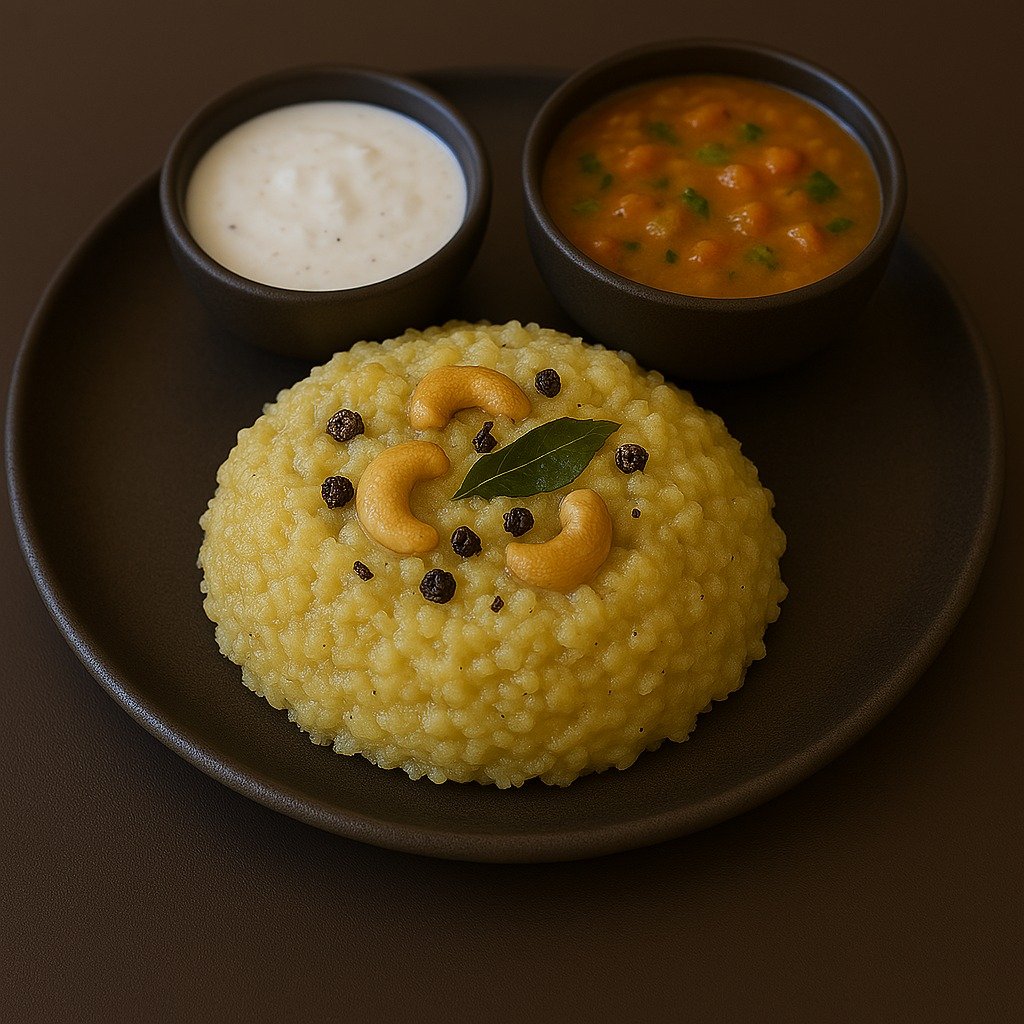
Warm, creamy, and spiced just right, Pongal is not just a dish—it’s a celebration of abundance and gratitude. Whether it’s the festive Sakkarai Pongal or the savoury Ven Pongal, this comfort food has soothed hearts and bellies for centuries across South India.
What Is Pongal?
Pongal is a classic South Indian dish made by cooking rice with moong dal, traditionally tempered with ghee, black pepper, ginger, and cumin. Named after the Tamil word ‘pongu’ (to overflow), it symbolizes prosperity. It can be sweet (Sakkarai Pongal) or savoury (Ven Pongal), and is commonly served for breakfast or during harvest festivals like Thai Pongal and Makar Sankranti.
How to Make Pongal: The Traditional Way
🛒 Ingredients:
- ½ cup raw rice
- ¼ cup split yellow moong dal
- 1 tbsp ghee (or more for richness)
- 1 tsp cumin seeds
- ½ tsp crushed black pepper
- 1-inch piece of ginger (grated)
- 8–10 curry leaves
- 8–10 whole cashews (optional)
- Salt to taste
- 3–3½ cups water
🥣 Method:
- Dry roast moong dal for 2–3 minutes until aromatic.
- Wash rice and roasted dal together. Add water and cook in a pressure cooker for 3–4 whistles until soft and mushy.
- In a small pan, heat ghee. Add cumin, pepper, grated ginger, curry leaves, and cashews.
- Pour the tempering over the cooked rice-dal mix.
- Add salt and mix everything well. Add extra ghee or hot water to adjust the consistency if needed. Serve hot.
🌿 Ayurvedic Benefits
- Combine shali (rice) and mudga (moong dal)—both sattvic, easily digestible, and nourishing.
- Ghee pacifies Vata and Pitta, improves Agni (digestive fire), and strengthens tissues.
- Ginger, pepper, and cumin kindle digestion and prevent bloating.
- Ideal during recovery, postpartum, or when Agni is low.
- Balancing all three doshas when prepared lightly and fresh.
💡Pro Tips from the Indian Kitchen
- Use a generous spoon of ghee for authentic taste and digestive ease.
- Lightly crush the black pepper to release its full flavour.
- Fry cashews until golden, but add them last to keep their crunch.
- Slightly overcook the rice and dal for a creamy, melt-in-mouth consistency.
- Add a small pinch of asafoetida (hing) to support digestion.
❤️ Why We Love pongal
- It’s comfort food at its best—warm, simple, and satisfying.
- Requires minimal ingredients, yet delivers rich flavour.
- Perfectly balances taste, nourishment, and ease.
- A go-to during festivals, lazy mornings, or healing days.
- One dish that can be dressed up or down—from temple prasadam to weekday breakfast.
🧘 Ideal For
- Breakfast, brunch, or light dinner
- Detox and fasting-friendly days in Ayurveda
- Sick days, postpartum care, and convalescence
- Festive rituals like Thai Pongal, Navaratri, and temple offerings
- People of all ages—from toddlers to elders
- Pairing with coconut chutney, sambar, or gothsu.