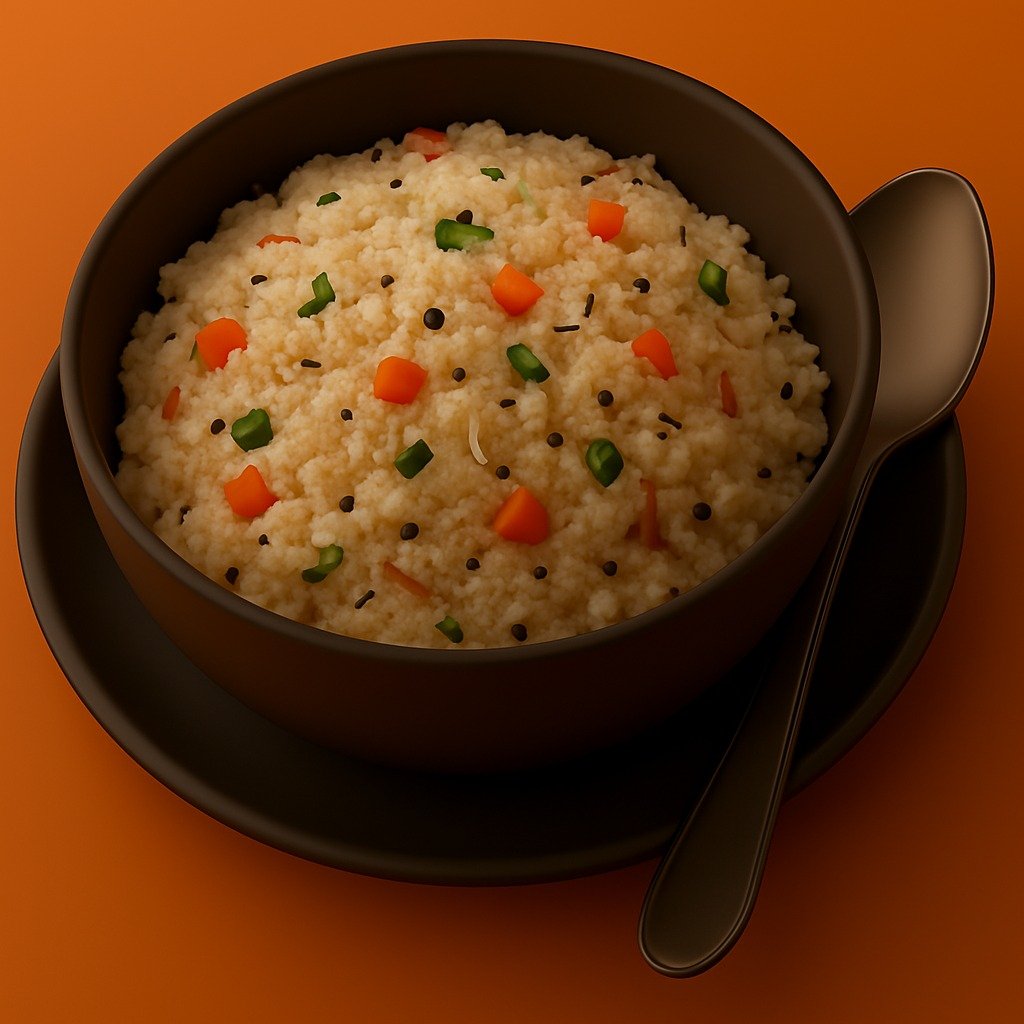
What Is Upma?
How to Make Upma: Simple and Classic
🛒 Ingredients
- 1 cup rava (semolina)
- 2–2.5 cups water
- 1 medium onion, chopped
- 1–2 green chillies, slit or chopped
- 1 tsp mustard seeds
- 1 tsp urad dal (split black gram)
- 1 tsp chana dal (Bengal gram)
- 8–10 curry leaves
- 1-inch ginger, grated (optional)
- 2 tbsp oil or ghee
- Salt to taste
- Fresh coriander, chopped
- Roasted cashews for garnish (optional)
- Finely chopped carrot, beans, or peas (optional)
🥣 Method
- Dry roast the rava in a pan on low heat until it turns aromatic and slightly golden. Keep aside.
- In a kadhai or pan, heat oil/ghee. Add mustard seeds and let them splutter.
- Add urad dal, chana dal, and roast till golden. Then toss in cashews if using.
- Add curry leaves, chopped green chillies, ginger, and onions. Sauté till onions turn soft.
- If using veggies, add them now and cook till they’re tender.
- Add water and bring to a boil. Add salt.
- Slowly pour in the roasted rava while stirring continuously to avoid lumps.
- Stir well until all water is absorbed and the mixture thickens.
- Cover and let it steam for a couple of minutes on low flame.
- Garnish with coriander leaves and a squeeze of lemon juice if you like.
🌿 Ayurvedic Benefits of Upma
- Easy to Digest (Laghu):
Made with semolina (rava), upma is light on the stomach and easy to digest — suitable for those with weak digestion or during convalescence. - Balances Vata (when warm and moist):
Served hot with ghee and mildly spiced, it helps pacify Vata dosha, especially when dryness or cold is aggravated. - Can be Tridosha-Friendly (with adjustments):
- Sattvic in Nature:
When prepared mindfully, with minimal spice and without onion-garlic, upma is sattvic — promoting clarity, calmness, and harmony.
💡 Pro Tips from the Indian Kitchen
- Roasting the rava is key — it prevents stickiness and gives that perfect fluffy texture.
- For extra aroma, use ghee instead of oil.
- Don’t rush the water-adding step — stir constantly to keep it lump-free.
- Add a spoon of grated coconut or sugar for a unique regional twist (especially in Karnataka or Maharashtra styles).
- Keep a lid on for 5 minutes after cooking — this allows the steam to finish the job.
❤️ Why We Love Upma
🧘 Ideal For
- Satisfying yet not too heavy – ideal for dinner on light days.
- Low in fat, can be made with minimal oil and added veggies.
- Mild and soothing — ideal when the appetite is low or digestion is weak.
- Made with semolina (rava/sooji), it’s filling yet easy on the stomach.